|

DAIMYO of
ECHIGO PROVINCE
Mizoguchi


- Domain: Shibata
- Stipend: 100,000 koku
- Class: Tozama 5
- Headquarters: Shibata Castle (Flatland)
.JPG)
.JPG)
.JPG)
.jpg)
Daimyo family originally from Owari and descended from Minamoto Yoshimitsu
(Seiwa-Genji). From 1598, it resided at Shibata.
Succession
- Hidekatsu
- Nobukatsu
- Nobunao
- Shigekatsu
- Shigemoto
- Naoharu
- Naruatsu
- Naoyasu
- Naoyoshi
- Naoaki
- Naohiro
- Naomasa
Sources
Sakakibara


- Domain: Takada
- Stipend: 150,000 koku
- Class: Fudai 4
- Headquarters: Takada Castle (Flatland)
Daimyo family descended from Nikki Sadanaga (Seiwa-Genji).
Succession
- Yasumasa (1548-1606) - 1st Sakakibara daimyo of Tatebayashi (Kozuke --
100,000 koku) (1590 – 1606)
- Yasukatsu (1590-1615)
- Tadatsugu - 3rd Sakakibara daimyo of Tatebayashi; daimyo of Shirakawa
(Mutsu -- 140,000 koku); 1st Sakakibara daimyo of Himeji (Harima -- 150,000
koku), first tenure
- Masafusa
- Masatomo - 3rd Sakakibara daimyo of Himeji; 1st Sakakibara daimyo of
Murakami (Echigo -- 150,000 koku)
- Masakuni - 2nd Sakakibara daimyo of Murakami; 1st Sakakibara daimyo of
Himeji (Harima -- 150,000 koku), second tenure
- Masasuke
- Masamine
- Masanaga - 4th Sakakibara daimyo of Himeji; 1st Sakakibara daimyo of
Takada
- Masaatsu
- Masanori
- Masakiyo
- Masachika
- Masataka
Notable Ancestors
Son of Sadanaga, settled at Sakakibara (Ise) and took the name of that
place.
-
Sakakibara
Yasumasa (1548-1606)
.jpg)
Served Ieyasu and in 1590 received the fief of Tatebayashi (Kozuke --
100,000 koku).
His descendants resided: in 1643 at Shirakawa (Mutsu);
in 1649 at Himeji (Harima); in 1667 at Murakami (Echigo); in 1704 at Himeji; lastly from 1741 at
Takada.
Sources
Naito

- Domain: Murakami
- Stipend: 50,000 koku
- Class: Fudai 5
- Headquarters: Murakami Castle
Family of daimyo, native of Mikawa and descended from Fujiwara Hidesato.
Succession
- Yoshikiyo
- Kiyonaga
- Nobunari (1545-1612)
- Nobumasa - Daimyo of Takatsuki (40,000 koku)
- Nobuteru - 1st Naito daimyo of Tanagura (Mutsu -- 70,000 koku)
- Nobuyoshi
- Kazunobu - 3rd Naito daimyo of Tanagura; daimyo of Tanaka (Suruga --
50,000 koku); 1st Naito daimyo of Murakami
- Nobuteru
- Nobuoki
- Nobuakira
- Nobuyori
- Nobuatsu (1777-1825, daimyo 1781-1825)
- Nobumoto (aka Nobuchika, Nobukoto, or Shinshi) (1813-1874, daimyo
1825-1864)
- Nobutami
- Nobutomi
Notable Ancestors
-
Naito
Nobunari (1545-1612)
Son of Tokugawa Hirotada and step-brother of Ieyasu, was adopted by Naito
Kiyonaga. He served Ieyasu and in 1590 made himself master of the castle of
Nirayama (Izu), which belonged to the Hojo and received it in fief with a
revenue of 10,000 koku. In 1601, he was transferred to Fuchu (Suruga -- 30,000
koku); then in 1606 to Hagahama (Omi -- 50,000 koku).
After him, his family lived: in 1628 at Tanakura (Mutsu);
in 1705 at Tanaka (Suruga); finally from 1720 at Murakami.
Related Branches
- Eldest branch: Nobeoka (Hyuga -- 70,000 koku)
- Younger branch: Yunagaya (Mutsu -- 14,000 koku)
- Branch: Koromo (Mikawa -- 20,000 koku)
- Branch: Takato (Shinano -- 33,000 koku)
- Branch: Iwamurata (Shinano -- 15,000 koku)
- Branch: Toba (Shima -- 32,000 koku)
Sources
Makino


- Domain: Nagaoka
- Stipend: 74,000 koku
- Class: Fudai 5
- Headquarters: Nagaoka Castle
Daimyo family that came from Mikawa and descended from Takechi-uchi no
Sukune.
Senior branch, resided successively: in 1590 at Tako (Kozuke); in 1616 at
Nagamine (Echigo); then from 1618 at Nagaoka.
Succession
- Narisada (1526-1567)
- Yasunari (1555-1609)
- Tadanari - 1st Makino daimyo of Nagaoka
- Tadanari
- Tadatoki
- Tadakazu
- Tadachika
- Tadataka
- Tadatoshi
- Tadahiro (1741-1766)
- Tadakiyo (1760-1828)
- Tadamasa (1799-1858, daimyo 1831-1858)
.jpg)
- Tadayuki (1824-1878; daimyo 1858-1867)
.jpg)
- Tadakuni (1844-1875, daimyo 1867-1868)
- Tadakatsu (1859-1918, daimyo 1868- )
Related Branches
- Junior branch: Komoro (Shinano -- 15,000 koku)
- Junior branch: Mineyama (Echigo -- 11,000 koku)
- Branch: Kasama (Hitachi -- 80,000 koku)
Sources
Makino
- Domain: Mineyama
- Stipend: 11,000 koku
- Class: Fudai 5
- Headquarters: Municipal office
Daimyo family that came from Mikawa and descended from Takechi-uchi no
Sukune.
Junior branch, which from 1634 resided at Mineyama.
Succession
- Narisada (1526-1567)
- Yasunari (1555-1609)
- Tadanari - 1st Makino daimyo of Nagaoka
- Sadanari
- Tadakiyo
- Tadataka
- ...
- Tadahiro - 1st Makino daimyo of Mineyama
Related Branches
- Senior branch: Nagaoka (Echigo -- 74,000 koku)
- Junior branch: Komoro (Shinano -- 15,000 koku)
- Branch: Kasama (Hitachi -- 80,000 koku)
Sources
Hori


- Domain: Muramatsu
- Stipend: 30,000 koku
- Class: Tozama 5
- Headquarters: Muramatsu Castle
Family of daimyo descended from Minamoto Yoshiuji (1189-1254) (Seiwa-Genji).
At the end of the 16th century, they took the name of Hori.
Eldest branch.
Succession
- Naomasa ( -1608)
- Naoyori (1577-1639) - Daimyo of Iiyama (40,000 koku); daimyo of Nagaoka
(Echigo -- 80,000 koku); 1st Hori daimyo of Murakami (Echigo -- 100,000
koku)
- Naosada
- Naotoki - 1st Hori daimyo of Muramatsu
- Naoyoshi
- Naotoshi
- Naoyuki
- Naotaka
- Naonori
- Naoyasu
- Naotsune
- Naohisa
- Naoyasu
- Naoyoshi
- Naohiro
Notable Ancestors
On entering the service of Hori Hidemasa, he changed his family name of
Okuda to Hori. Later on, he served Hideyoshi, who in 1598 confided the castle of Sanjo
(Echigo -- 50,000 koku) to him.
In 1616, occupied of Nagaoka (Echigo); and in 1618, that of
Murakami (Echigo).
In 1644, his descendants were transferred to Muramatsu, where they remained.
Related Branches
- Branch of Naoyuki: Shiiya (Echigo -- 10,000 koku)
- Branch of Naoshige: Susaka (Shinano -- 15,000 koku)
Sources
Hori
- Domain: Shiiya
- Stipend: 10,000 koku
- Class: Fudai 5
- Headquarters: Municipal office
Family of daimyo descended from Minamoto Yoshiuji (1189-1254) (Seiwa-Genji).
At the end of the 16th century, they took the name of Hori.
Branch coming from Naoyuki that from 1698 resided at Shiiya.
Succession
- Naomasa ( -1608)
- Naoyuki
- Naokage
- Naoyoshi
- Naosada - 1st Hori daimyo of Shiiya
- Naonaka
- Naotsune
- Naohisa
- Naoyoshi
- Naoaki
- Naonobu
- Naotomo
- Naonori
- Naoharu
- Naochika
- Yukitoshi
- Yukitoshi
Notable Ancestors
On entering the service of Hori Hidemasa, he changed his family name of
Okuda to Hori. Later on, he served Hideyoshi, who in 1598 confided the castle of Sanjo
(Echigo -- 50,000 koku) to him.
Related Branches
- Eldest branch: Muramatsu (Echigo - 30,000 koku)
- Branch of Naoshige: Susaka (Shinano -- 15,000 koku)
Sources
Matsudaira (Echizen)

- Domain: Itoigawa
- Stipend: 10,000 koku
- Class: Shinpan 5
- Headquarters: Unknown castle
Family issued from Hideyasu, 2nd son of Ieyasu.
Junior branch of Tadamasa, from 1717 resided at Itoigawa.
Succession
- Hideyasu (1574-1607)
- Tadamasa
- Mitsumichi
- Naokata
- Naotomo
- Naoyuki - 1st Matsudaira daimyo of Itoigawa
- Naoyoshi
- Katafusa
- Naotsugu
- Naomasu
- Naoharu
- Naokiyo
- Naoyasu
Notable Ancestors
-
Matsudaira
Hideyasu (1574-1607)
Was brought up by Hideyoshi, and took part in his campaign in Kyushu
against the Shimazu (1587). In 1590, Yuki Harumoto, daimyo of Shimosa, having
no children, asked Hideyoshi to get him an adoptive son; Hideyoshi selected
Hideyasu, who from that moment bore the name of Yuki and entered into
possession of the fief of Yuki (100,000 koku). In 1600, he accompanied his
father in the war against Uesugi Kagekatsu, then assisted at the battle of
Sekigahara, after which he received the daimyoate of Kita-no-sho (Echizen --
670,000 koku). He died at the age of 33, leaving five sons, whose descendants
formed the eight branches of Matsudaira of Echizen.
Related Branches
- Senior branch: Tsuyama (Mimasaka -- 100,000 koku)
- Junior branch: Fukui (320,000 koku)
- Branch of Naomasa: Matsue (Izumo -- 186,000 koku)
- Branch: Hirose (Izumo -- 30,000 koku)
- Branch: Mori (Izumo -- 10,000 koku)
- Branch of Naomoto: Unayabashi (Kozuke -- 170,000 koku)
- Branch of Naoyoshi: Akashi (Harima -- 100,000 koku)
Sources
Ii
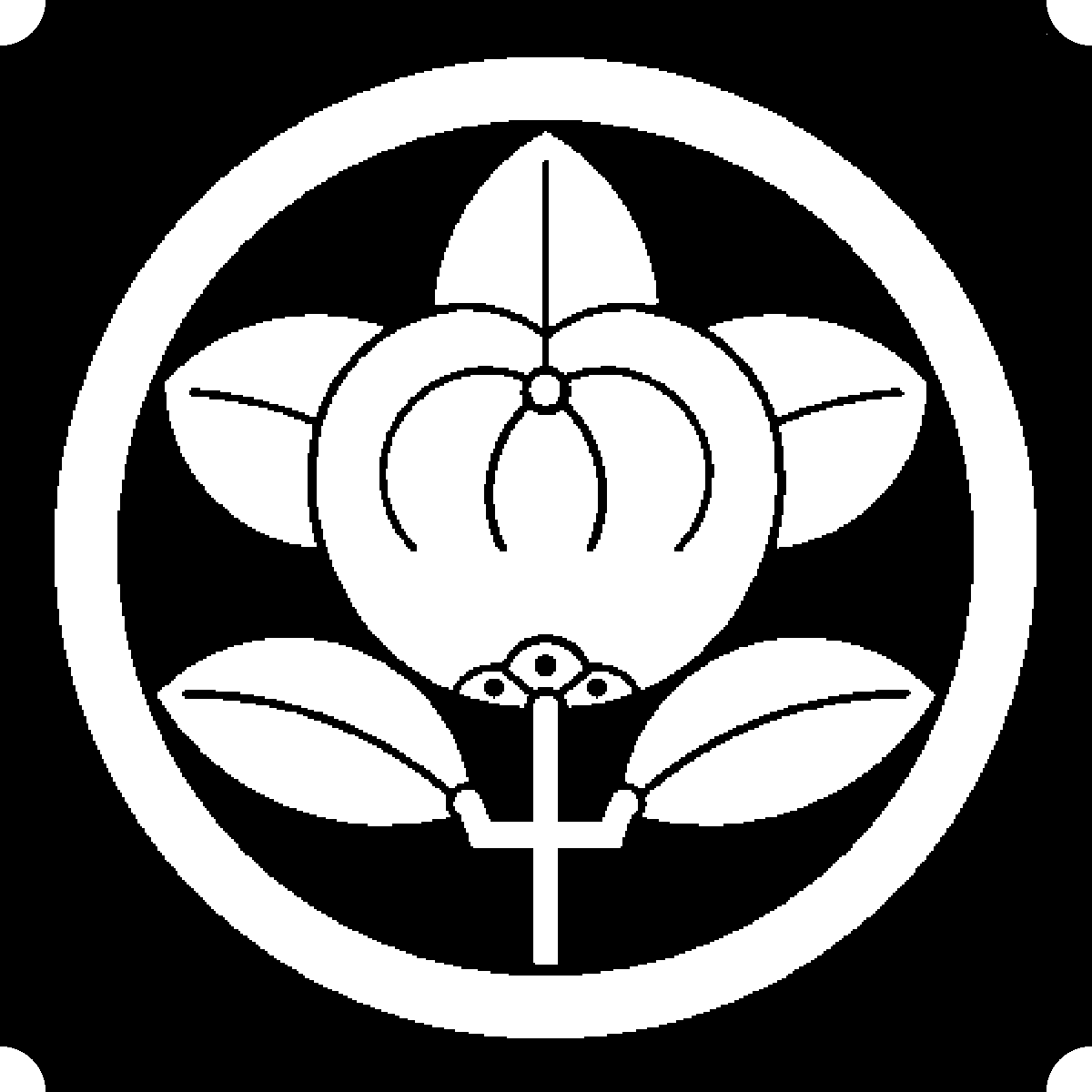
- Domain: Yoita
- Stipend: 20,000 koku
- Class: Fudai 5
- Headquarters: Yoita Castle
Daimyo family native of Totomi and descended from Fujiwara Yoshikado.
Junior branch.
Succession
- Naomasa (1561-1602)
- Naokatsu - 1st Ii daimyo of Annaka (Kozuke -- 30,000 koku)
- Naoyoshi - 2nd Ii daimyo of Annaka; daimyo of Nishio (Mikawa -- 35,000
koku); 1st Ii daimyo of Kakegawa (Totomi -- 35,000 koku)
- Naotake
- Naotomo
- Naonori - 4th Ii daimyo of Kakegawa; 1st Ii daimyo of Yoita
- Naoharu
- Naokazu
- Naoari
- Naokuni
- Naoaki
- Naoteru
- Naotsune
- Naoatsu
- Naoyasu
Notable Ancestors
.jpg)
Served under Ieyasu, who in 1590 gave him the castle of Minowa (Kozuke --
12,000 koku). Thence in 1589 he went to Takasaki. At the battle of Sekigahara
(1600), he defeated Shimazu Yoshihiro. Ieyasu then appointed him to Sawayama
(Omi -- 180,000 koku).
Eldest son of Naomasa. In 1602 succeeded him, and, although inhabiting the
castle of Sawayama, was obliged to build that of Hikone (Omi). At the time of
the Osaka war (1615), he remained in his castle. Hidetada, irritated, replaced him by
his brother Naotaka, and instead of the immense domains of Omi, he gave him
the little fief of Annaka (Kozuke -- 30,000 koku).
Thence in 1645 his descendants removed successively to Nishio (Mikawa); in
1658 to
Kakegawa (Totomi); and in 1705 to Yoita.
Related Branches
- Elder branch: Hikone (Omi -- 240,000 koku)
Sources
Yanagisawa


- Domain: Mikkaichi
- Stipend: 10,000 koku
- Class: Fudai 5
- Headquarters: Municipal office
Daimyo family, descended from Takeda Nobuyoshi (Seiwa-Genji).
Junior branch which from 1723 resided at Mikkaichi.
Succession
- Yoshiyasu (1658-1714)
- Tokichika - 1st Yanagisawa daimyo of Mikkaichi
- Yasutsune
- Nobuaki
- Satoyuki
- Satoyo
- Satoaki
- Yasutaka
- Noritada
Notable Ancestors
-
Yanagisawa
Yoshiyasu (1658-1714)
.jpg)
Son of a simple samurai who had a revenue of 150 koku, was the protege of
the Shogun Tsunayoshi who gave him the titles of Dewa no kami, Mino no kami,
Roju, then the fiefs of Sanuki (Kazusa -- 22,000 koku) in 1690, and Kawagoe
(Musashi -- 82,000 koku) in 1694. When Tsunayoshi adopted his nephew Tsunatoyo,
the latter left his fief of Kofu, which
in 1704 was given to Yoshiyasu (150,000 koku).
Related Branches
- Senior branch: Koriyama (Yamato -- 150,000 koku)
- Junior branch: Kurokawa (Echigo -- 10,000 koku)
Sources
Yanagisawa
- Domain: Kurokawa
- Stipend: 10,000 koku
- Class: Fudai 5
- Headquarters: Municipal office
Daimyo family, descended from Takeda Nobuyoshi (Seiwa-Genji).
Junior branch which from 1723 resided at Kurokawa.
Succession
- Yoshiyasu (1658-1714)
- Tsunetaka - 1st Yanagisawa daimyo of Kurokawa
- Satozumi
- Satoakira (disgraced)
- Yasutaka
- Nobutou
- Mitsuhi
- Mitsuteru
- Mitsukuni
Notable Ancestors
-
Yanagisawa
Yoshiyasu (1658-1714)
Son of a simple samurai who had a revenue of 150 koku, was the protege of
the Shogun Tsunayoshi who gave him the titles of Dewa no kami, Mino no kami,
Roju, then the fiefs of Sanuki (Kazusa -- 22,000 koku) in 1690, and Kawagoe
(Musashi -- 82,000 koku) in 1694. When Tsunayoshi adopted his nephew Tsunatoyo,
the latter left his fief of Kofu, which
in 1704 was given to Yoshiyasu (150,000 koku).
Related Branches
- Senior branch: Koriyama (Yamato -- 150,000 koku)
- Junior branch: Mikkaichi (Echigo -- 10,000 koku)
Sources
|
![[Company Logo Image]](../images/Feudal%20Japan%20Logo.gif)


